
They didn’t just tear down the projects -they erased us off the map
https://new.express.adobe.com/webpage/68HNklrbPt79K

Atlanta– The smell of BBQ smoke and the sound of dominos slapping with kids’ laughter in the background, used to fill the air at Bowen Homes. Children play tag between red big brick building while Georgia red clay flying from their feet Come grandmother’s watch from porch chairs that had held generations of family stories. Today, the 22-acre lot sits empty, it’s cracked pavement baking under the same Georgia sun that watched children play double dutch between housing projects brick building now is a gold mine… again.
Mr. Demetrius Rome, 50, can still remember the outline of his childhood apartment in Perry Homes housing projects with his eyes closed. Right there, he says, pointing to a luxury loft building with a rooftop pool, that’s where my momma hung our Christmas lights every year. The three $3,200 a month units now a company this space featured quartz countertops and dog spa amenities far removed from the reality of the families displaced.
Perry Homes Before & After
A Calculated Erasure
The demolition of Atlanta’s public housing was it accidental urban decay? It was systematic removal. 1994, Atlanta Housing Authority documents obtained by the AJC revealed officials targeted concentrate property zones, a coded term for black neighborhoods near downtown’s booming real estate. The demolition of Atlanta’s public housing represents the largest urban removal program in U.S. history.
Since 1994 come 92% of public housing units from 14,000 just to 1,100 have been demolished, displacing over 22,000 black residents, equivalent to emptying every seat in State Farm Arena 11 times. More than 50 housing projects have been erased, recruiting landmarks like Bowen Homes(1964-2009) birthplace of influential figures; Perry Homes (1956-2008) community anchor for three generations, and Bankhead Courts (1971-2011) home of multiple trendsetting Grammy nominated and winning artist. This systematic dismantling has reshaped Atlanta’s landscape, erasing history and displacing thousands.
Atlanta didn’t just fix up neighborhoods it wiped out entire black communities on purpose. City leaders called it progress, but records show they targeted black areas near downtown where land prices were rising. That’s like kicking out everyone in a small city. Places like Bowen Homes and Perry Homes, they weren’t just building they were a tight knit community where families live for generations period now those spots have luxury apartments most former residents can’t afford.
Infographic highlighting Atlantis housing affordability crisis and its impact on black communities, showing an 83% rise in housing costs versus 17% income growth since 1990
The Human Costs: Broken Promises, Scattered Families
This wasn’t just about losing apartments it broke up families in a race history. When they demolished Bankhead Courts, families got split across different suburbs. Grandmas who used to watch grandkids after school now an hour apart. The rec center where kids trained to become pro athletes gone.
The money didn’t trickle down either. Black shop owners got priced out-one barber said his customers can’t afford to visit him anymore because day got moved too far away. Even people with housing vouchers got rejected-landlords took one look at their old project address and said, “no vacancy.”
Former Residents Describe a Pattern of Betrayal:
1. They said we could come back
- The Atlanta Housing Authority AHA promised displaced residents first access to new mixed income housing
- Reality: only 12% of original Perry Homes families returned
2. Family’s Torn Apart
- Relocation vouchers scattered relatives across metro Atlanta from Riverdale to Douglasville.
- My grandkids won’t know their cousins now, says Stephanie Walker, 48
3. Businesses Buried
- Black-owned shops that thrived near projects couldn’t afford new rents.
Example: The West End Mall was a hub for black businesses: during the malls early years in the 1970s, It provided opportunities for black business owners, coinciding with the era of white fight in Urban Development.
4. Broken Promises
The Atlanta Housing Authority right to return policies allow displaced people to move back to their communities after being pushed out by gentrification. Of 148 Bankhead Courts families tracked by the Urban League: only 9% secure units in replacement developments
- 41% became housing insecure
- 23% were pushed outside of I-285
5. Cultural Amputation
The late military veteran James Jones often said: They didn’t just take our homes they took our classrooms. Lost institutions include:
- The Bankhead Recreation Center where coaches mentored future NBA MLB and NFL stars
- The Perry homes streets that hosted legendary rap battles and cook offs
- The Techwood home daycare where’s civil rights leader’s children played
6. Economic Exclusion
Highlights systematic erasure of Black communities in gentrifying areas
Urban Displacement Project study shows 60% of Atlanta’s low-income households live in low or moderate to high income neighborhoods that are stable period 22% of lower income neighborhoods in Atlanta were at risk of gentrification in 2017, and 7% were undergoing displacement of low-income households without gentrification.
Over the past five decades, a mass infiltration of new residents has led to the displacement of thousands of black residents. The National Community Reinvestment Coalition’s (NCRC) study, “displaced by design: 50 years of gentrification and black cultural displacement in U.S. cities,” finds that between 1980 and 2020, Atlanta saw 155 formerly majority black neighborhoods fill up to majority white residents.
In 2015, an analysis by Governing Magazine said Atlanta was the fifth most gentrified city in the US we also know that 90 to 95% of homes built in the last five years has been in luxury category well out of the price range of the average income workforce.

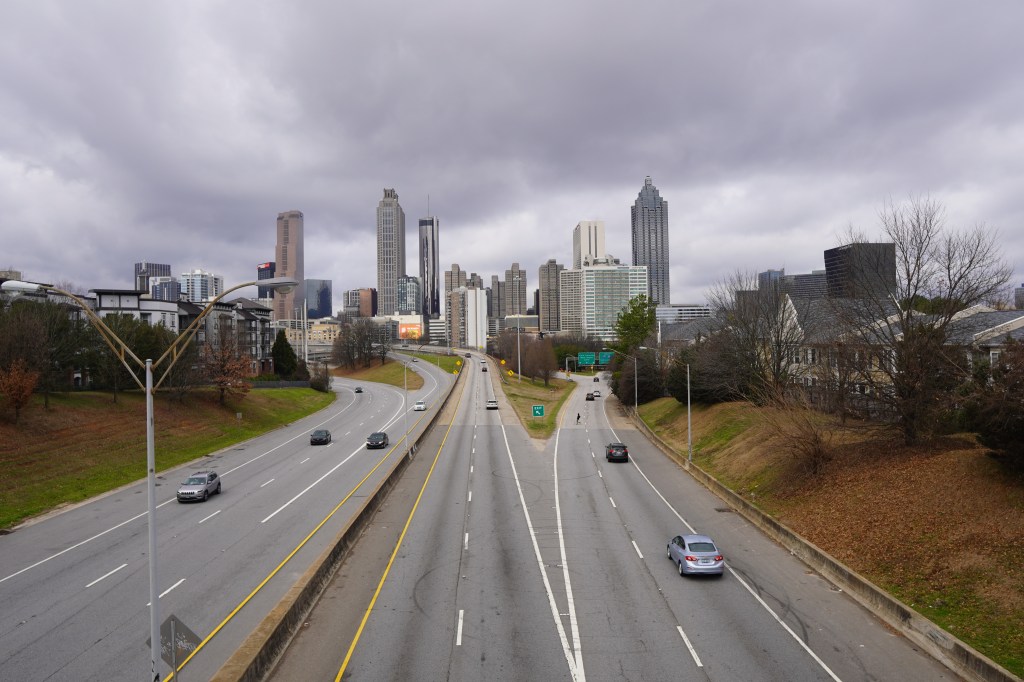
Two Cities One Skyline
While the New Atlanta Thrives With:
$4.8 Billion Belt Line
Atlanta Belt Line Map
Tech Headquarters Microsoft, Google, Apple
Voices From the Front Lines
Long time residents ask: who is this path for? Kelly Ross, Atlanta resident: “you can’t celebrate Atlantis culture while ignoring the people who created it. The civil rights leaders, the rappers, the cook’s, the barbers, the teachers– they all have been pushed to Clayton County.”
Longtime Atlanta resident Christine Thompson: Atlanta’s black population didn’t shrink it was redistributed. The metro area gang 300,000 black residents while the city properly lost them. This was social engineering.
Policy failures and emerging solution what went wrong:
- No meaningful community input in redevelopment plans
- Affordable housing requirements easily weighed 89% of the cases
- Property tax breaks for developers but not legacy residents
- Right to return laws passed in 2023 after 10-year fight
- Anti displacement tax freeze for seniors in gentrifying areas
The Fight to Remember
1. The Atlanta Memory Project Has Mapped:
- 200 plus erased black businesses
- 18 demolished churches
- 32 erase community spaces
2. Youth Programs Teach History Through:
- Augmented reality tours of demolished sites
- Oral history partnership with elders
- Before the bulldozers are installations
3. Policy Advocacy Including:
- Mandatory affordable units in new developments 30% target
- Property tax relief for Lexi businesses
Community benefit agreements
Community groups are:
- Documenting oral stories before voices are lost
- Demanding affordable housing laws only 8% of new units are truly affordable
- Creating memorials landmarks at the sites legacy born homeowners and plant campaign
- Conclude: What Atlanta Story Teaches Us
- 1. Progress shouldn’t require erasure to you demolishing history is a development is the placement.
- 2. Culture can’t be replicated you can’t stream the community like is music.
- 3. The fight isn’t over. Support groups like Housing Justice League.
- How Can Everybody Help
- 1. Support: Donate to the Housing Justice League
- 2. Advocate: Demand community benefit agreements from developers
- 3. Educate: Share this article with #DontEraseATL #Atlanna
- 4. Call: Get in touch with your council man or woman
Final Thought
If you love what Atlanta brings to the table if you enjoyed the music, the art, the vibe of the city then you have got to respect the hands that stir the pot long before you got here. You are now part of this fabric, this tradition. Young or old, transplant or native we all have to honor those who cooked up the culture that makes Atlanta special.
Atlanta skyline may shine brighter today but it so came from the people and places pushed out. Real progress doesn’t erase history; it makes room for everyone. Atlanta is the phoenix and will rise again.


 Tacory Jones 404
Leave a comment